anonymization.ai - Your sensitive documents. AI-ready.

Glanos anonymization.ai automatically detects, removes, or pseudonymizes personal and confidential content in documents and textual data.

Make AI reliably usable, with data governance, traceability, and data protection built in from the start.

  • Web app for manual review processes and API for AI pipelines
  • SaaS in Germany or on-premise
  • Secure and customizable for regulated environments
  • Made in Germany

Easy anonymization within one minute
See how documents can be processed quickly and transparently with Glanos anonymization.ai. The video shows the typical workflow, from handover to usable output.

Schedule a demo

From sensitive document to usable output

1. Submit a document or text

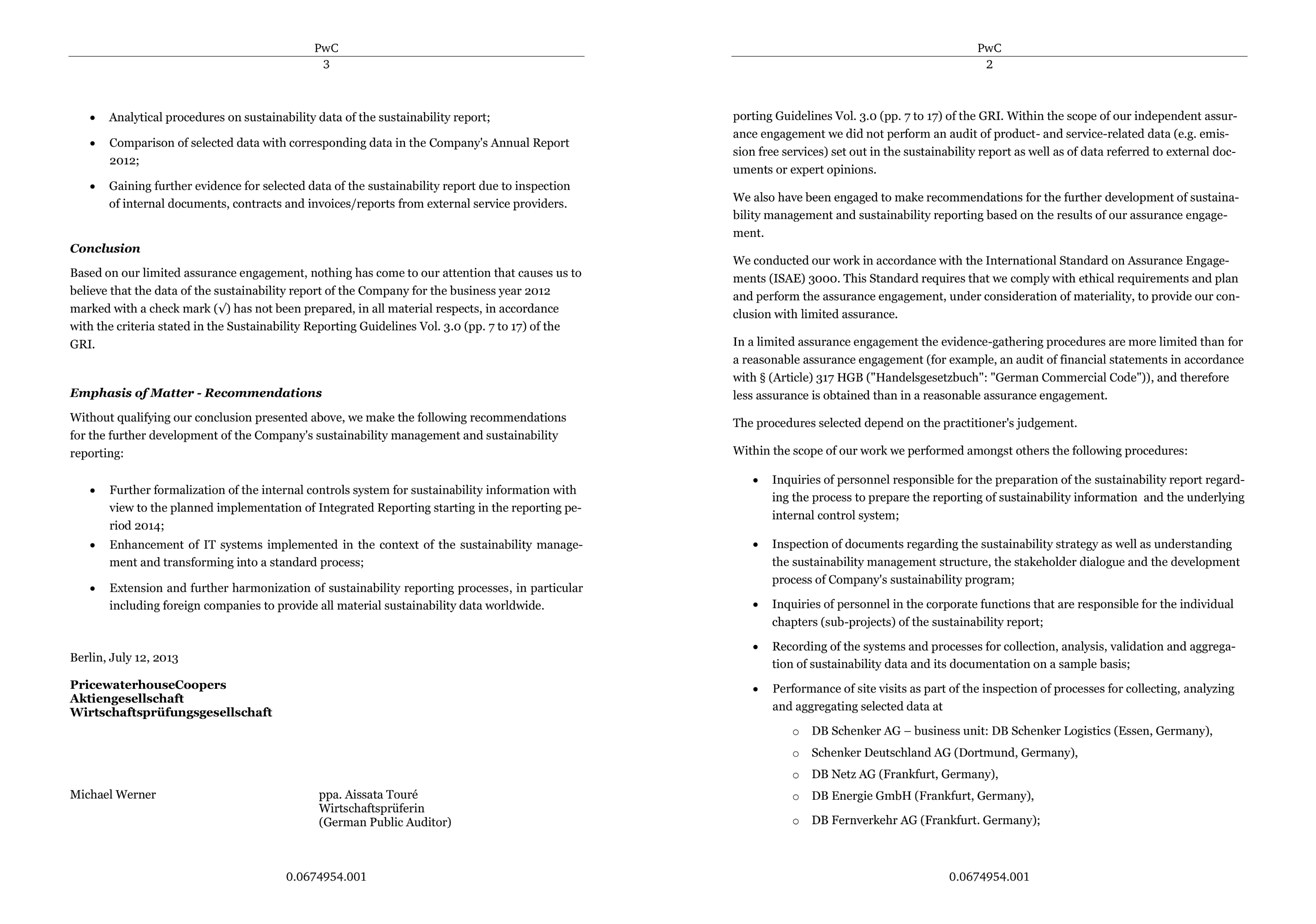
Users upload Word, Powerpoint, Excel, PDF files, scans, emails and other formats containing contracts, case files, expert and business reports, letters, tickets, free-text fields, or internal knowledge documents via the web app, or transfer content automatically through the API.

2. Detect sensitive information

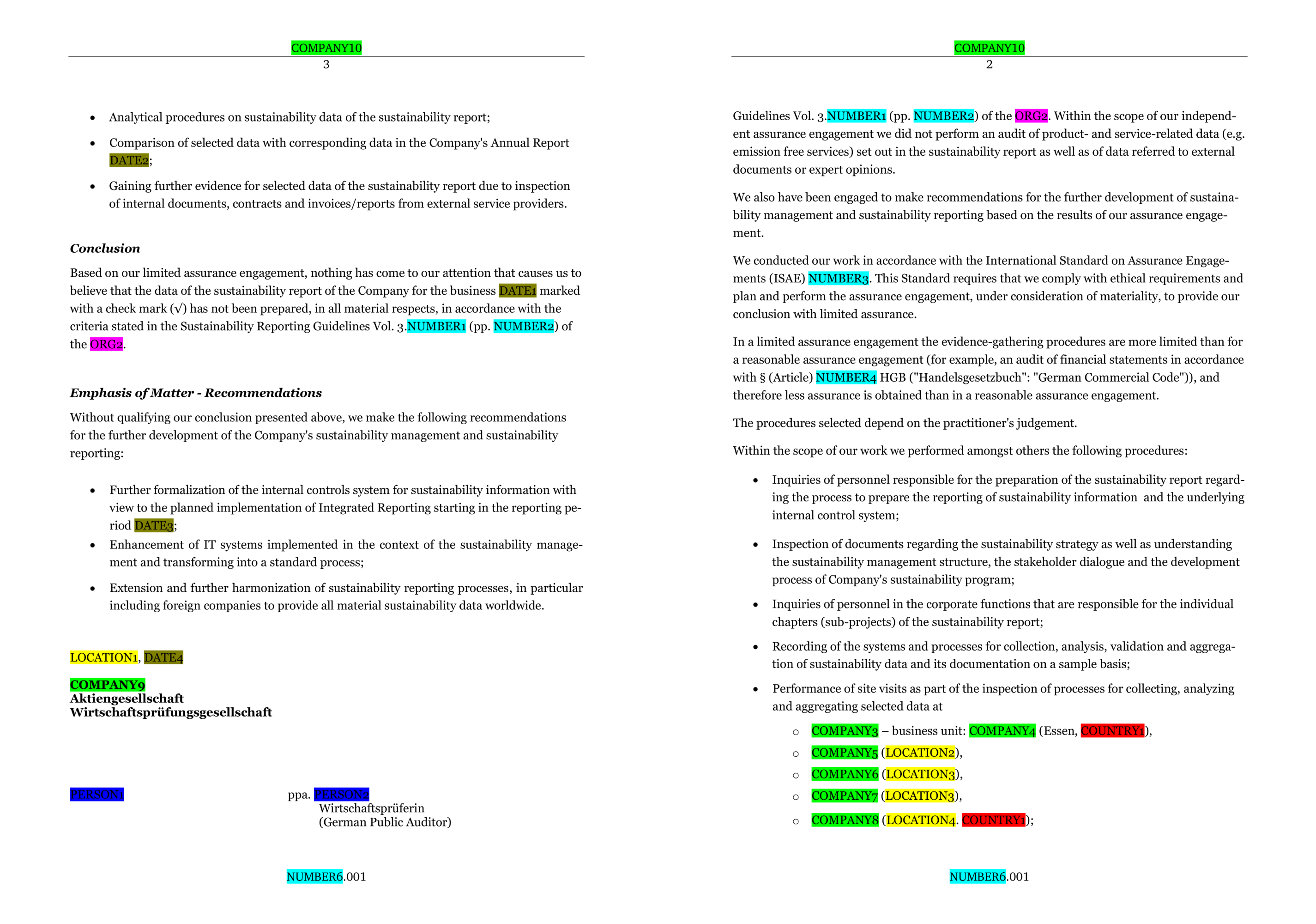
Based on the target process, the system determines how detected information should be handled. anonymization.ai analyzes the content and automatically identifies personal, confidential, or otherwise sensitive information. This includes names, addresses, or contact details and, depending on the use case, also indirect references, roles, organizations, locations, dates, file numbers, or domain-specific contextual information.

4. Optionally review and correct

For particularly sensitive processes, a manual review step can be included. Subject-matter experts or data protection officers can check the results before a document is reused.

5. Generate usable output

Depending on the process, the result may be anonymized, pseudonymized, or redacted versions, structured outputs, or API responses for downstream systems. For AI workflows, analytics processes, internal sharing, quality assurance, archiving, or publication.

AI projects don’t fail because the idea is weak. They fail because sensitive data stays locked behind compliance barriers.

A company’s most valuable information is often found in unstructured documents: contracts, case files, expert reports, business reports, emails, case notes, or free-text fields. These contain expert knowledge that is especially relevant for AI systems.

At the same time, these are precisely the types of content that are legally, organizationally, or commercially sensitive. They may contain personal data, confidential information, professional secrets, trade secrets, or internal details.

Manual anonymization is usually not a viable solution. It is slow, error-prone, difficult to scale, and poorly suited to recurring AI and analytics processes.

What is missing is a controlled, scalable intermediate step: a verifiable preparation process for sensitive content before it is processed further. Without this step, valuable data remains unused, departments work with different assumptions, shadow processes emerge, and AI pilots remain stuck in experimentation mode.

Use cases - Where anonymization.ai creates value

Relevant wherever sensitive content needs to be processed, shared, or made usable for AI. anonymization.ai protects operational data and preserves the knowledge base you have built over years, in compliance with GDPR and confidentiality requirements.
GenAI and LLMs with sensitive content

Prepare documents and free-text data for AI assistants, internal knowledge systems, retrieval-augmented generation, and analytics workflows.

Sharing confidential documents

Share documents in a controlled way with internal teams, external service providers, experts, auditors, or partners

Pseudonymized process chains

Temporarily separate personal references from subject-matter content and reconnect them via a separate mapping when there is a legitimate need.

Analytics, quality assurance, and internal evaluation

Make protected content usable for analysis, quality checks, training data review, or process improvement.

Archiving and later use

Avoid GDPR deletion obligations. Reduce risks related to storage, internal availability, and later reuse.

Disclosure and access requests

Prepare documents before external sharing, publication, or file inspection. Handle GDPR data subject access requests securely and in time.

Schedule a demo

Security, governance, and operations

Auditable for data protection, IT, and security

Sensitive content needs more than good detection. What matters is an operating model that fits data protection, IT security, and governance requirements.
Glanos anonymization.ai is designed to be embedded into auditable enterprise processes.

Operating options

The operating model is selected to match the protection requirements of your content. SaaS in Germany with German hosting providers, or on-premise operation in your own environment for seamless integration into existing security and process landscapes.

Certified controls

Glanos is certified by Rödl+Partner according to ISAE 3402 Type 2. The specific scope and relevant evidence can be provided as part of an audit.

Data protection and contractual documents

Relevant documents can be provided for data protection and organizational review, depending on the deployment scenario. These may include: data processing agreement (DPA), technical and organizational measures, information on hosting and subprocessors, architecture and data flow information, deletion and retention information, and a non-disclosure agreement (NDA) if required.

Traceability throughout the process

In regulated environments, not only the result matters, but also the path that leads to it. Depending on the configuration, processing rules, editing steps, review processes, and outputs can be designed so they remain internally traceable and auditable.

Schedule a demo

What companies should know about anonymization

1. Confidential data and personal data are not the same

Both types of data require special care when using AI, but for different reasons.

Confidential data protects companies: trade secrets, intellectual property, internal strategies, NDAs, or professional secrets. Personal data protects people. It is governed by the GDPR, with requirements regarding purpose, legal basis, transparency, data minimization, and protective measures. Particularly sensitive data, such as health data, is subject to additional requirements. It may only be processed under stricter legal conditions.

2. Personal data may be processed, but not arbitrarily

Personal data may also be processed without anonymization if the purpose, legal basis, and protective measures are appropriate. A contract, consent, or legitimate interest may serve as a legal basis. However, they do not replace purpose limitation. Data collected for support, contract fulfillment, or billing may not automatically be used for every later AI use case. Violations of these principles can have serious consequences, including GDPR fines of up to EUR 20 million or 4 percent of worldwide annual turnover, whichever is higher.

3. Once the purpose has ended, the real data question begins, including deletion obligations

When the original purpose has been fulfilled, personal data may not simply continue to be used in the production system. Depending on the type of data, retention obligations, documentation obligations, or legitimate defense interests may exist. In most cases, however, this does not mean unrestricted further use. It usually means blocking, access restriction, minimization, or deletion.

4. Pseudonymization reduces risk, but does not automatically remove personal reference

Pseudonymization replaces direct identifiers with pseudonyms. However, attribution usually remains possible, for example through a separate mapping table. For this reason, pseudonymized data generally remains personal data. The benefit is not that the GDPR no longer applies, but that risks are reduced and data can be used more safely.

5. Effective anonymization removes personal reference

Effectively anonymized data is no longer subject to the GDPR because no individual can be identified. The decisive factor is not whether names have been removed, but whether re-identification can be ruled out using means that are reasonably likely to be available. This depends on the data context, additional knowledge, data combinations, and technical capabilities.

6. Incorrect anonymization is often only visual redaction

Redaction must technically remove information, not merely hide it visually. Especially in PDFs, text may still remain embedded in the document underneath black boxes. The file may look anonymized, but technically it is not.

7. Structured data requires different methods than text data

In tables, columns and data types are usually known. Direct identifiers can therefore be handled in a relatively targeted way. Combinations are more difficult: age, location, professional role, rare event, or timestamp may become identifying when combined.

8. Unstructured data is the real stress test for AI

In emails, tickets, contracts, legal briefs, or free-text fields, personal references do not appear in fixed positions. Names, places, organizations, phone numbers, IBANs, dates, medical references, rare events, and indirect contextual information must be detected and handled consistently. For AI use cases, there is an additional requirement: the subject-matter meaning should be preserved, while identifying information is reliably removed or replaced.

Let's talk

Industries

Many organizations possess valuable text data, but cannot readily use it for AI, analytics, or knowledge management.

In documents, emails, reports, and case files, personal data, confidential information, and identifying contextual details are often deeply embedded in free text.
anonymization.ai prepares sensitive text data so that it can be used more safely for AI applications: anonymized, abstracted, structured, and documented in a traceable way.

Law firms and legal departments

Contracts, pleadings, client documents, emails, and internal case notes contain particularly confidential information. This makes AI-assisted research, contract analysis, and internal knowledge work more difficult. anonymization.ai prepares legal text data so that confidential content is protected and relevant knowledge structures can be used for internal AI applications.

Insurance companies

Claims files, expert reports, customer communications, and case notes contain valuable information for automation, analytics, and AI-assisted process improvement. At the same time, they are personal, confidential, and often difficult to structure. anonymization.ai prepares these documents for AI training, case analysis, and operational support, in a traceable way and with attention to data protection and governance.

Healthcare

Hospitals, care facilities, and psychiatric institutions work with highly sensitive free-text documents: medical letters, care reports, progress notes, discharge summaries, and case notes. anonymization.ai supports the preparation of medical and care-related text data for research, quality assurance, analytics, and AI applications, without exposing sensitive information in an uncontrolled way.

Consulting, Professional Services, and Audit Organizations

Project reports, expert opinions, proposals, workshop documentation, and analyses contain valuable experiential knowledge. At the same time, they are often mixed with confidential customer, project, and case details. anonymization.ai helps turn this material into an AI-ready knowledge base. Sensitive information is detected, removed, or abstracted, while methods, case patterns, reusable text modules, and lessons learned remain available for new projects.

Public sector

Public administrations work with files, applications, decisions, citizen communications, and internal processes. These documents are relevant for automation and AI pilots, but often contain sensitive personal information. anonymization.ai prepares administrative documents for secure AI pilots, internal analysis, publication, or sharing, in a controlled, structured, and traceable way.

Banks and financial service providers

Advisory records, contractual documents, compliance materials, and customer-related communications are subject to high requirements for data protection, confidentiality, and auditability. anonymization.ai helps financial organizations make sensitive text data usable for AI and analytics applications in a controlled way, without losing sight of governance and documentation requirements.

Discuss your use case

Why Glanos?

Built for real enterprise workflows

anonymization.ai is designed for processes in which business departments, IT, data protection, and security teams need to work together.

The solution supports manual editing via the web app as well as automated processing through API interfaces.

Customizable for document types and target processes

A contract requires different rules than a medical report. An internal AI search requires different outputs than an external publication. A pseudonymized process chain requires different logic than final redaction.

That is why anonymization.ai can be adapted to different document types, protection requirements, and target processes.

Operating models for regulated environments

Depending on the protection requirements, the solution can be operated as SaaS or on-premise. This allows the operating model to be adapted to existing security and governance requirements.

Working with with business departments, IT, and data protection

Anonymization is rarely just a technical problem. In most cases, subject-matter expertise, data protection, security, and process reality need to be brought together.

That is why Glanos supports companies not only with software, but also with experience in classifying and introducing document-based anonymization processes.

  1. Classify the use case: Which document types, which sensitive data? Should the content be anonymized, pseudonymized, or redacted? What is the target system of the process?
  2. Define protection requirements and rules: Business departments, data protection, IT, and security define which information should be handled in which way.
  3. Run a pilot with representative documents: The goal is not a polished demo, but a reliable assessment. Does the preparation process work for the specific use case? Which adjustments are needed? How much manual review effort is required?
  4. Plan integration and operations: This includes operating model, interfaces, roles, access concepts, documentation, data protection documents, and technical integration.
  5. Support productive use: We are there for you, pragmatically and goal-oriented.

Anonymization is not a magic button. It is a controlled process that combines technology, domain understanding, and clear governance.

I believe trust in this environment is not created by algorithms alone. It is created through transparent communication, realistic assessment, reliable implementation, and contacts who remain available after the demo.

That is why we support projects not only with a product, but with an understanding of the perspectives of business departments, IT, data protection, and security.

Dr. Christian Bauer – Your contact

Talk with me

FAQ

Why shouldn't I use open-source tools for anonymization?

Open source gives you code, but not reliable anonymization: When sensitive data is involved, what matters is expert guidance, measurably high precision and recall, and experience with the hidden classes of errors that can otherwise tie up development teams for months and, in the worst case, silently expose data.

How much effort is it for my IT department?

We offer to host the service on our cloud (in Germany or Europe) but also on-premise installs via standardized docker containers.

Can I integrate it in Sharepoint or in my tool XYZ?

Yes, we already have integrations in common systems like Sharepoint. The modular structure of anonymization.ai also allows to integrate into almost any other tool.

Can all my employees work with the tool?

Yes – no installation need for end-users – just open browser.

Can you support file format XYZ?

Yes, that is possible in general – talk to our experts.

Which languages do you support?

DE, EN, ES, FR, IT, PT, NL, SV – more languages available on request

Get in a touch and book a demo

  • Please contact gerhard.rolletschek@glanos.de for general product inquiries and product demonstrations or call +49 89 998 299 151
  • Please contact christian.bauer@glanos.de for inquiries regarding anonymization.ai
  • If you want to apply for a job, please send your CV to info@glanos.de
  • For all further inquiries please write to info@glanos.de - please do not cold call us if you want to sell to us